4.48 Psychosis
Opera and music
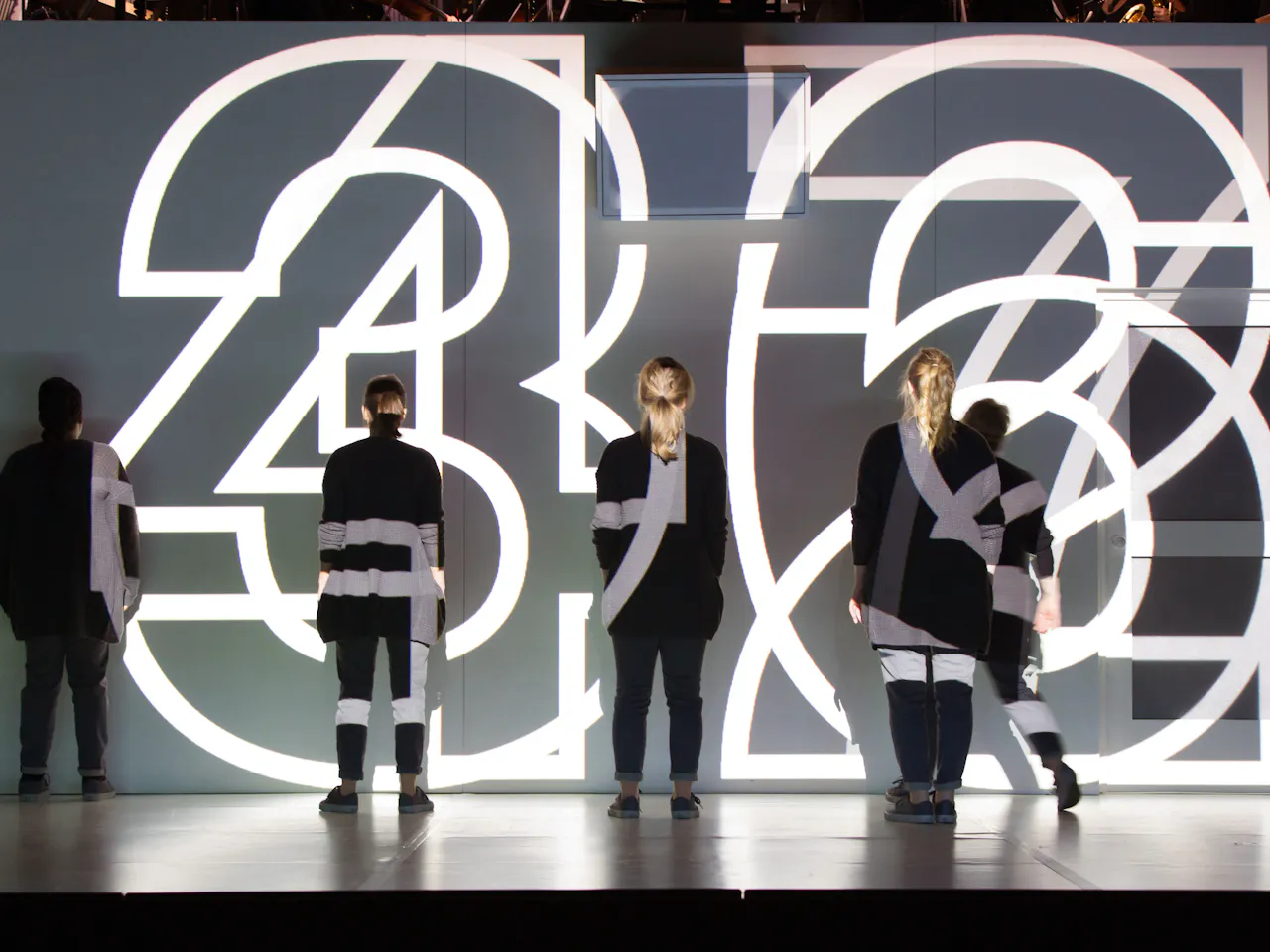
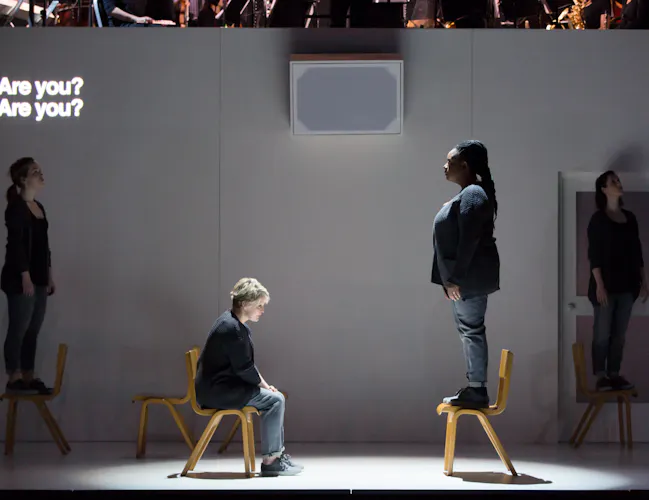
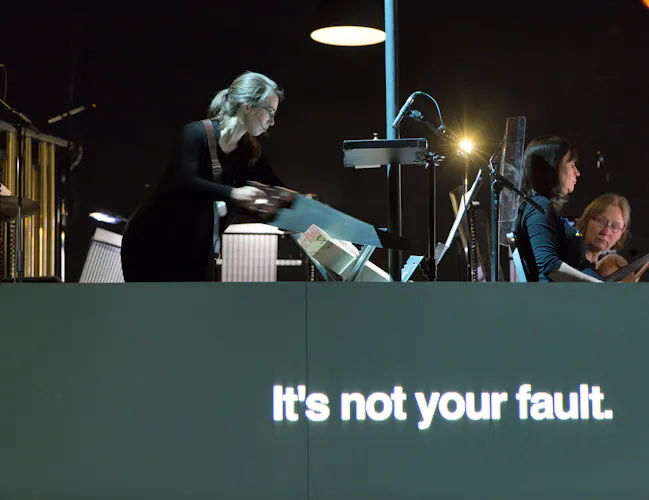
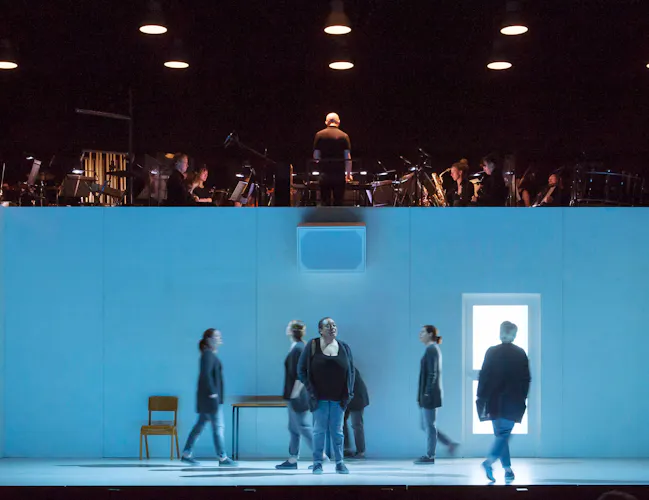
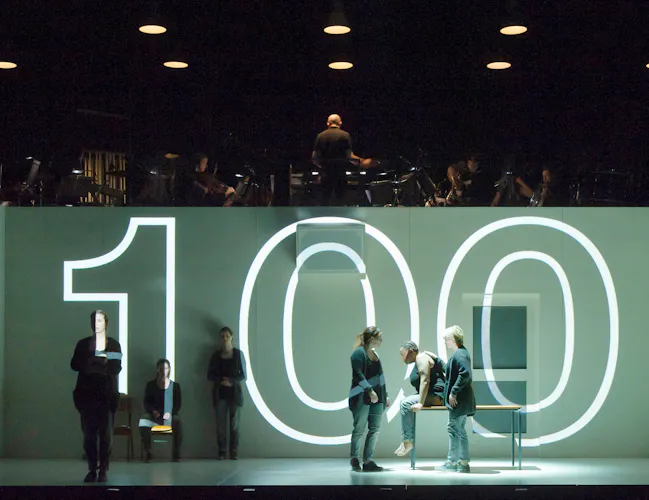
An unflinching portrait of fury and despair. Ted Huffman's stark and stripped-back staging of Philip Venables's opera makes its debut on the Linbury Stage. Conductor Naomi Woo draws out the moments of clarity, anguish and fleeting hope that colour the music, with the voices of six singers cutting to the heart of Sarah Kane’s text.
Ticket price
Dates
Location
Approximate timings
This performance lasts approximately 1 hour and 30 minutes, with no interval.
Accessibility
- Audio Described
Expand all dates
Saturday 17 October, 7.15pm
Monday 19 October, 7.15pm
Tuesday 20 October, 7.15pm
Guidance
Suitable for ages 16+
This production includes themes of depression, psychosis, schizophrenia, eating disorders and borderline personality disorder. There are depictions of violence, self-harm, suicide and death. There are instances of strong language as well as flashing lights and loud noises.
Language
Sung in English with English surtitles, which are displayed on screens above the stage and around the auditorium.
Generous support from
Co-commission with
Guildhall School Of Music & Drama
Creatives
The artists and creatives behind the production
Composer
Text
Director
Designer
Lighting Designer
Video Designer
Sound Designer
Revival Video Designer
Revival Sound Designer
Original Movement Director
Movement Directors
Discover
A stream-of-consciousness cry of psychological anguish. Based on the devastating 2000 play by Sarah Kane, 4.48 Psychosis charts the fragmented mind of a patient struggling with clinical depression and the often-violent clash between selfhood and psychiatric intervention. Pulsing with urgency, the opera’s elliptical text is underpinned by Philip Venables’s thrilling, and at times, startling, score.
Theatre origins
The inspiration
English playwright Sarah Kane wrote her final play, 4.48 Psychosis, shortly before taking her life on 20 February 1999, at the age of 28. Composed of 24 sections, the play alternates between dialogue, confessional monologue and poetic stream-of-consciousness, with its title referencing the time – 4.48am – when Kane would often wake, lucid in her depressed state. The play had its premiere at the Royal Court Jerwood Theatre on 23 June 2000, with a cast of three. Since its first performance, 4.48 Psychosis has received numerous other stagings, each varying significantly due to the play’s lack of specified setting, characters or stage directions.
Prior to 4.48 Psychosis, Kane’s work included her first play Blasted (1995), the short 11-minute film Skin (1995), which had its premiere on Channel 4, and the plays Phaedra’s Love (1996), commissioned by Gate Theatre and inspired by the Roman play based on the Greek tragedy, Cleansed (1998), inspired by Roland Barthes’ A Lover’s Discourse, and Crave (1998).
An enduring partnership
The creatives
British composer Philip Venables’s operatic adaptation of Kane’s play was co-commissioned by The Royal Opera and had its premiere at Lyric Hammersmith in 2016, to critical acclaim. Approved by Kane’s brother, the opera, staged by American director and writer Ted Huffman, also went on to earn a 2017 Olivier Award nomination for Best New Production. Prior to 4.48 Psychosis, Venables had gained recognition for his contemporary compositions, including works for orchestra, vocalists and small ensemble. 4.48 Psychosis was his first opera, followed by Denis & Katya (2019), another collaboration with Huffman based on the real-life stories of Russian teenagers and lovers Denis Muravyov and Katya Viasova, who broadcast their final days together online. Venables and Huffman have since worked on two other operas together, The Faggots & Their Friends Between Revolutions (2023), a musical adaptation of Larry Mitchell’s gay manifesto, and most recently, We Are The Lucky Ones (2025), inspired by interviews of Western Europeans born between 1940 and 1949.
Gallery
Accessibility and resources
For step free-access and wheelchair spaces in the Linbury Theatre, you will need to book seats on the right-hand side of the auditorium.
We have an assistive listening system available to use. Surtitles, captions and translations in English are displayed on screens above the stage and around the auditorium.
Join our Access Scheme for priority access to tickets and to inform us of your access requirements.
See our Accessibility page for more information or view a visitors guide (PDF, 12.0 MB).
Be the first to know
Sign up to hear the latest Royal Ballet and Opera news, receive ticket alerts, and discover how to support us.