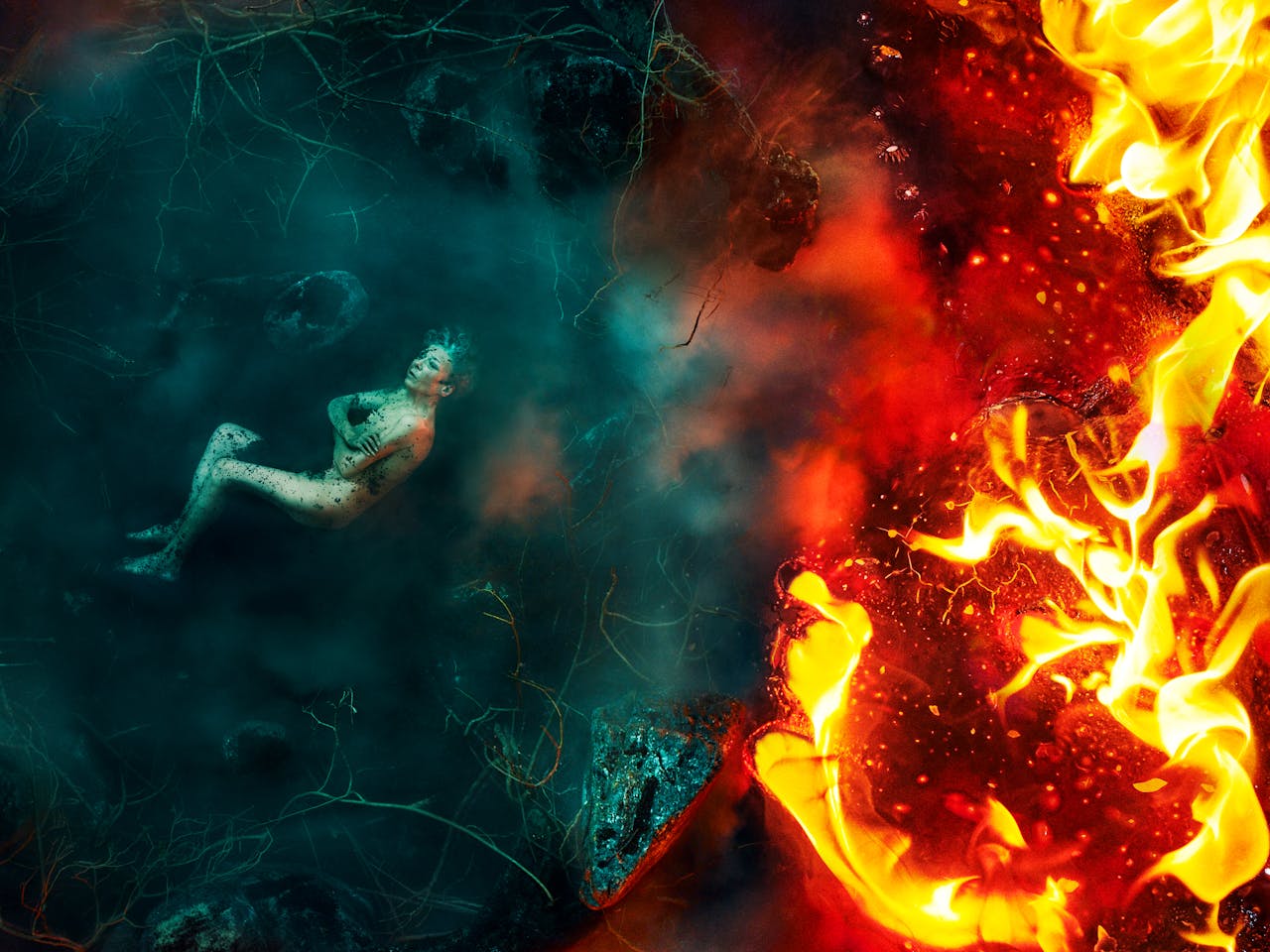
Ring cycle 1
4 - 10 October 2027
- Monday 4 October, 7.30pm - Das Rheingold
- Tuesday 5 October, 4.30pm - Die Walküre
- Thursday 7 October, 4pm - Siegfried
- Sunday 10 October, 2.30pm - Götterdämmerung
Pricing TBC
Not yet on sale
Not yet on sale
General booking opens on 17 March 2027
Priority booking dates
Dates
Location
Approximate timings
Four operas over four days
Das Rheingold: 2 hours and 30 minutes, with no interval
Die Walküre: 5 hours and 35 minutes, including two intervals
Siegfried: 5 hours and 45 minutes, with two intervals
Götterdämmerung: 6 hours and 10 minutes, with two intervals
4 - 10 October 2027
Pricing TBC
Not yet on sale
11 - 17 October 2027
Pricing TBC
Not yet on sale
18 - 24 October 2027
Pricing TBC
Not yet on sale
25 October - 1 November 2027
Pricing TBC
Not yet on sale
Guidance
Suitable for ages 12+
Das Rheingold: This production contains scenes of nudity and depictions of blood and violence.
Die Walküre: This production contains themes of incest and domestic violence. This production contains scenes of nudity and depictions of blood, violence and death. Strobe lighting is used during Act I. Pyrotechnics are used during Act III.
Siegfried: This production contains nudity and violence. There are themes of incest. There are pyrotechnics used towards the end of Act I.
Götterdämmerung: More information available soon. Please note that, as this is a new production, age guidance and content warnings may be subject to change.
Approximate timings
There are four performances across four days in the Ring cycle.
Das Rheingold
This performance will last for approximately 2 hours and 30 minutes with no interval.
Die Walküre
The performance will last approximately 5 hours and 35 minutes, including two intervals
Act I:
1 hour 5 minutes
Interval:
25 minutes
Act II:
1 hour 30 minutes
Interval:
1 hour 20 minutes
Act III:
1 hour 15 minutes
Siegfried
The performance will last approximately 5 hours and 45 minutes, including two intervals
Act I:
1 hour 20 minutes
Interval:
30 minutes
Act II:
1 hour 15 minutes
Interval:
1 hour 20 minutes
Act III:
1 hour 20 minutes
Götterdämmerung
The performance lasts approximately 6 hours and 10 minutes, including two intervals.
Interval 1:
40 minutes
Interval 2:
1 hour
Language
Sung in German with English surtitles, which are displayed on screens above the stage and around the auditorium.
Generous support from
Exceptional philanthropic commitments for the Ring cycle from
Ring Season Principals Alex and Elena Gerko and The Julia Rausing Trust
Ring Principal Benefactors
Charles Holloway OBE and Hamish and Sophie Forsyth
Ring Benefactors
Christopher and Sarah Smith, The Goldhammer Foundation, John G. Turner & Hango G. Fischer, Pat and Dirk Bister, Ingemo and Karl Otto Bonnier, Malcolm Herring, Philipp Freise, John Sunderland & George Shishkovsky and an anonymous philanthropist
Generous philanthropic support from
Michael and Joanna Richards and The Ring Cycle Production Syndicate
A ring forged from stolen gold of the river Rhine, granting dominion over the world, lies at the heart of Wagner’s epic tetralogy. The cycle begins with the greedy dwarf Alberich, who renounces love to forge the treasure. Soon, though, Wotan, father of the gods, seizes the ring, cutting it from Alberich’s finger. Distraught, Alberich curses the ring: merciless jealousy and ruthless wrath will consume those who possess or covet it, each possessor to be murdered by the next. And so, the stage is set for a series of climactic events, pitting gods against mortals in a conflict spanning multiple generations...
Creative Team
Das Rheingold
Die Walküre
Siegfried
Götterdämmerung
Over four evenings, Wagner’s cycle traces the ring’s fateful journey through gods, giants, dwarfs and mortal heroes, all culminating in Wotan’s daughter Brünnhilde’s unforgettable sacrifice, the fiery destruction of Valhalla and, at last, the ring’s climactic return to the depths of the Rhine.
The complete cycle crowns a remarkable artistic journey for The Royal Opera. Since the premiere of Das Rheingold in 2023, each instalment of Barrie Kosky’s visionary new Ring has been met with critical acclaim, establishing the productions as one of the defining interpretations of the age. The cycle now comes together for the first time, allowing audiences to experience the full sweep of Wagner’s epic narrative as it was intended to be seen: 15 hours of incredible music over the course of a week.
It also marks a significant moment in the musical life of Company. Following his acclaimed leadership of the individual instalments, Conductor Laureate of The Royal Opera Antonio Pappano hands the baton to Music Director of The Royal Opera Jakub Hrůša, to conduct the complete cycle.
With many singers from the original casts returning, Kosky’s production reimagines Wagner’s mythic world with psychological insight, theatrical imagination and striking visual storytelling, bringing fresh perspective to a work that continues to captivate audiences 150 years after its completion. Singers returning include Christopher Maltman, Elisabet Strid, Andreas Schager, Stanislas De Barbeyrac and Natalya Romaniw.
Wagner is known for his pioneering use of ’leitmotifs’ – recurring musical fragments associated with characters, objects and ideas – that evolve and interweave across the Ring cycle’s 15 hours of music. Among the composer’s most celebrated leitmotifs is the thunderous Valkyrie motif from the famous ’Ride of the Valkyries’, which opens Act III of Die Walküre, conjuring the Valkyries’ airborne flight with driving strings, trilling woodwinds and a leaping fanfare. The orchestra demands nearly 100 players, including Wagner tubas invented specifically for this work, six harpists, and 18 on-stage anvils for Das Rheingold. Other popular leitmotifs to listen out for in the cycle include the Sword/Nothung motif (appearing in Das Rheingold and Die Walküre) and the Fafner motif (representing Siegfried’s formidable dragon).
Wagner began work on the Ring cycle in 1848, inspired by the medieval Nibelungenlied (a heroic epic poem), Norse sagas and Greek tragedy. He completed all four libretti by December 1852, in reverse order, before composing the music chronologically – pausing for twelve years between Acts II and III of Siegfried to write Tristan und Isolde and Die Meistersinger von Nürnberg. Supported by King Ludwig II of Bavaria, Wagner completed the cycle and premiered it at his purpose-built Bayreuth Festspielhaus on 13-17 August 1876, an event that generated worldwide excitement and established the Ring as the ultimate test for any opera company.
Listen to an Audio Described introduction for Siegfried on SoundCloud.
There is lift access and there are step-free routes to over 100 seats in the Stalls Circle, Balcony and Amphitheatre. Some seats in the Stalls Circle, Balcony, Amphitheatre and the Donald Gordon Grand Tier are accessed by 9 steps or fewer. There are 10 steps or more to access seats in the Orchestra Stalls.
You can use the assistive listening systems in our auditoriums. Surtitles, captions and translations in English are displayed on screens above the stage and around the auditorium.
Join our Access Scheme for priority access to tickets and to inform us of your access requirements.
See our Accessibility page for more information or view a visitors guide (PDF, 12.0 MB).
Sign up to hear the latest Royal Ballet and Opera news, receive ticket alerts, and discover how to support us.