Il trittico
Opera and music
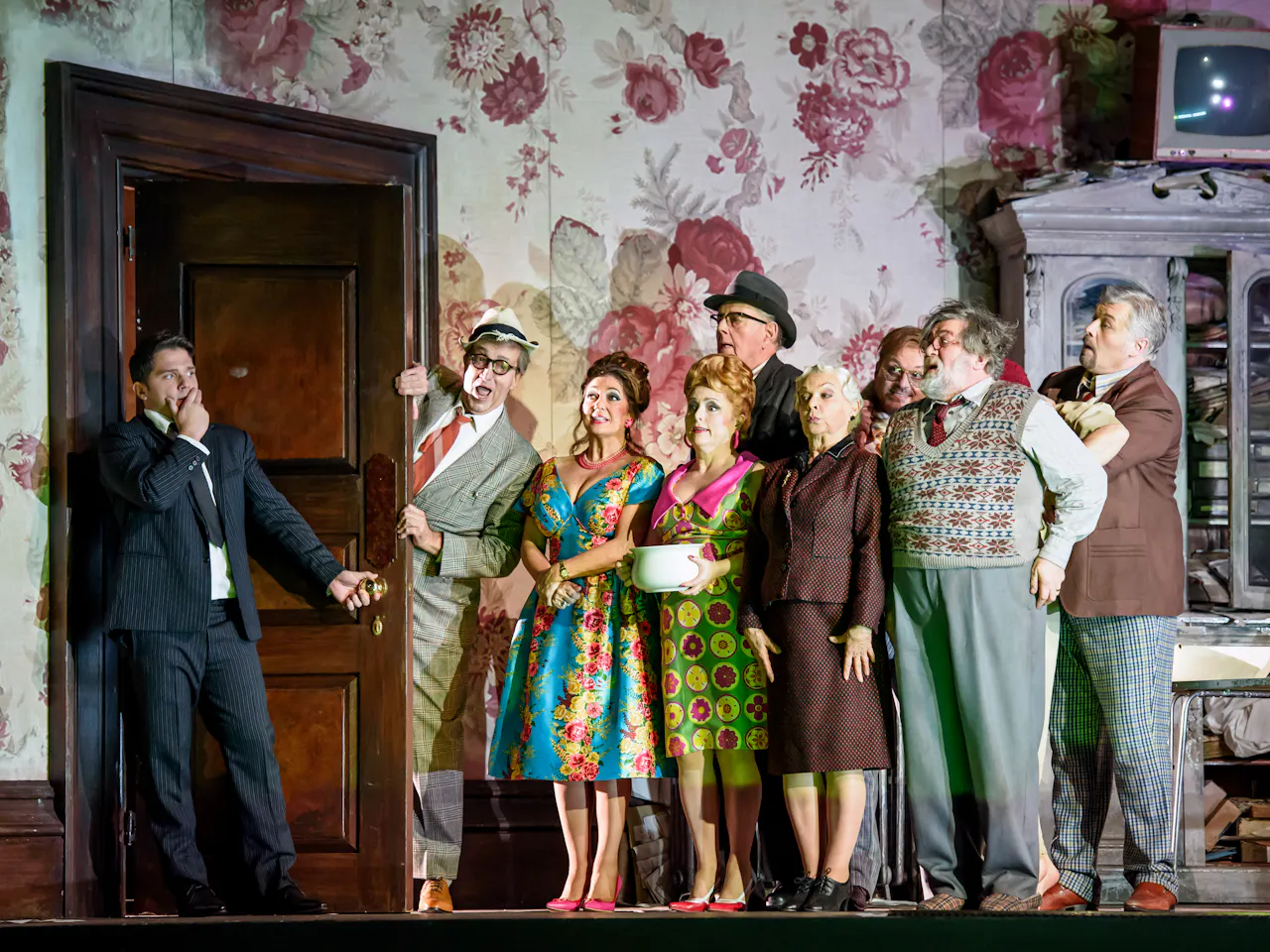
Lovers. Mothers. Gold-diggers. In this spectacular trio of Puccini operas, love’s contrasts are laid bare. The Olivier Award-winning Richard Jones directs, and Speranza Scappucci conducts three casts featuring Natalya Romaniw, Étienne Dupuis, SeokJong Baek, Ermonela Jaho and Bryn Terfel.
Not yet on sale
General booking opens on 21 October 2026
Priority booking dates
Dates
Location
Approximate timings
This performance lasts approximately 3 hours and 40 minutes, including two intervals.
Il tabarro:
50 minutes
Interval :
30 minutes
Suor Angelica:
55 minutes
Interval:
30 minutes
Gianni Schicchi:
55 minutes
Expand all dates
Friday 5 March, 6.30pm
Sunday 7 March, 3.00pm
Tuesday 9 March, 6.30pm
Guidance
Content suitable for all.
Children under the age of five are not permitted into our theatres. Children over the age of five must have their own ticket and sit next to an accompanying adult.
Language
Sung in Italian with English surtitles, which are displayed on screens above the stage and around the auditorium.
Generous support from
Exceptional philanthropic support from
Royal Ballet and Opera Principal The Julia Rausing Trust
Generous Philanthropic support from
Martin and Jane Houston, Nicholas and Suzanne Peters, The Aria Circle, Royal Ballet and Opera International Council and the Royal Opera House Endowment Fund
In Partnership with Rolex, Principal Partner, The Royal Opera

Synopsis
Synopsis
The stories of Il trittico
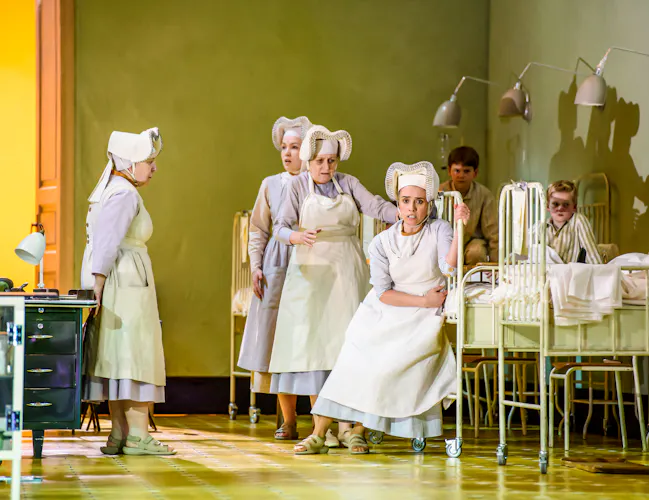
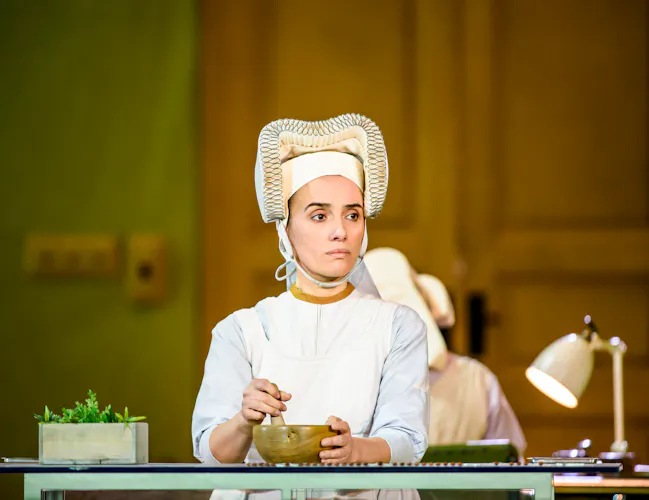
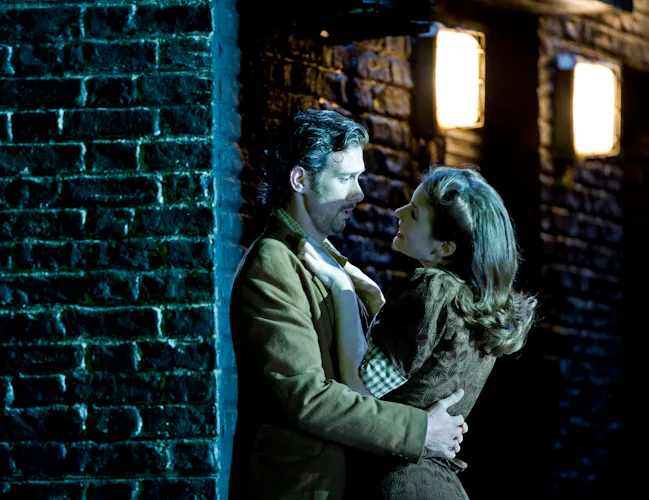
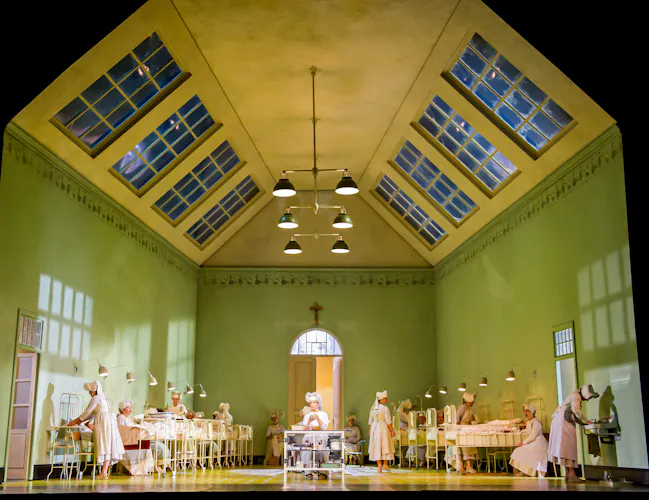
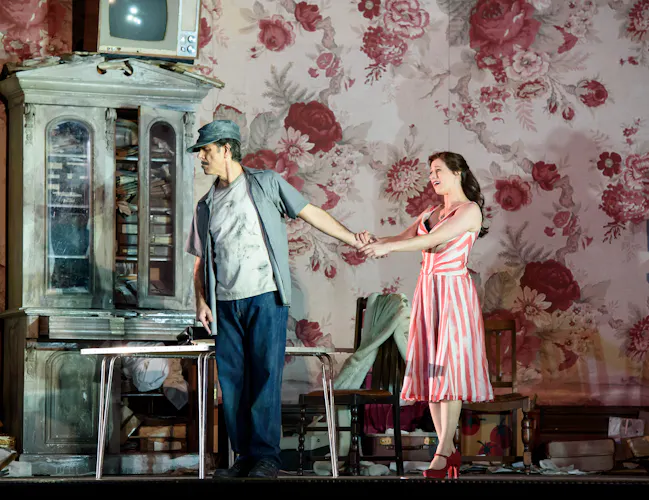
In Il tabarro, Giorgetta seeks relief from her misery at the death of her baby by having an affair – how will her husband Michele react? In Suor Angelica, the nun Angelica is visited by a relative who brings unwelcome news. And in Gianni Schicchi, a Florentine family enlists the cunning Schicchi to help them rewrite a will, little knowing that Schicchi has his own plans.
Read the full synopses
Creatives
The artists and creatives behind the production
Il tabarro
Music
Libretto
Director
Set Designer
Costume Designer
Lighting Designer
Movement Director
Suor Angelica
Music
Libretto
Director
Set Designer
Costume Designer
Lighting Designer
Movement Director
Gianni Schicchi
Music
Libretto
Director
Set Designer
Costume Designer
Lighting Designer
Movement Director
Discover
In this spectacular trio of Puccini operas, love’s contrasts are laid bare – from the tragedy of jealousy in Il tabarro, to the agonising price of shame in Suor Angelica and the hilarious antics of Gianni Schicchi (featuring the beautiful aria, ‘O mio babbino caro’).
Find out more about the three works in Il trittico:
Three contrasting musical worlds
The production
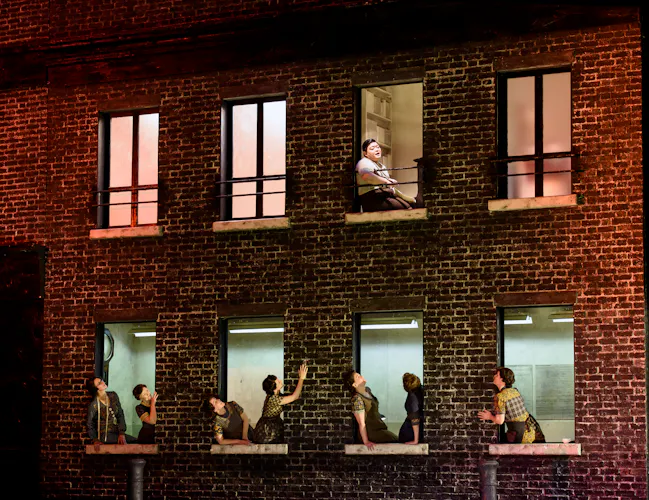
The musical worlds of the three one-act operas that make up Puccini’s Il trittico (‘The Triptych’) are distinct, yet complementary. Set in Paris, Il tabarro opens with an extraordinary musical depiction of the Seine at dusk, while the characters’ working-class environment is evoked through popular music: drinking songs, the organ-grinder’s melody and the song of the ballad-singer. Suor Angelica is the most lyrical of the three operas, with melodic motifs which return with poignant significance; while in Gianni Schicchi, the bickering Donatis are brought hilariously to life through their rapid, rhythmically insistent music, which contrasts with the young lovers’ lyricism.
For many years, it was a rare treat to hear all three operas of Il trittico performed together – Suor Angelica was regularly dropped, and Gianni Schicchi was often paired with works by other composers. However, the works are increasingly performed as Puccini wished: as a one-of-a-kind operatic triptych from a master of Italian opera.
Three different sources
The inspiration
Il tabarro was a reworking of La Houppelande, a melodramatic play by Didier Gold that Puccini saw in Paris in 1912. The plot of Suor Angelica seems to have been invented by Puccini and his librettist Giovacchino Forzano, while the inspiration for Gianni Schicchi came from a passing mention of the character in Dante’s Divine Comedy, and from a commentary on Dante published in 1866.
Musical mothers and fathers
The music
The most famous aria from the trio has to be Lauretta’s coaxing, ‘O mio babbino caro’, sung to her stubborn father, in order to persuade him to let her marry the man she loves. Other highlights include Suor Angelica’s heartrending aria ‘Senza mamma’, and, in Gianni Schicchi, Rinuccio’s vibrant Tuscan aria, ‘Firenze e com’è un albero fiorito’. Il tabarro is full of melodic treasures too – including an aria in praise of a cat!
Gallery
Accessibility and resources
There is lift access and there are step-free routes to over 100 seats in the Stalls Circle, Balcony and Amphitheatre. Some seats in the Stalls Circle, Balcony, Amphitheatre and the Donald Gordon Grand Tier are accessed by 9 steps or fewer. There are 10 steps or more to access seats in the Orchestra Stalls.
You can use the assistive listening systems in our auditoriums. Surtitles, captions and translations in English are displayed on screens above the stage and around the auditorium.
Join our Access Scheme for priority access to tickets and to inform us of your access requirements.
See our Accessibility page for more information or view a visitors guide (PDF, 12.0 MB).
Be the first to know
Sign up to hear the latest Royal Ballet and Opera news, receive ticket alerts, and discover how to support us.